Technical decisions
Choosing a voice model for the real experience.
A beautiful voice sample is only one part of a text-to-speech decision.
The challenge
A polished sample is not the whole conversation.
The voice may need to handle names, numbers, unfamiliar words or different speaking styles. The product may also need streaming output, predictable response time or specific usage terms. A useful comparison starts with the experience being built, rather than a favorite demo.
The approach
Turn preference into a repeatable comparison.
Agree on what good sounds like and what the system must support. Give candidate models the same representative material and record the tradeoffs.
Write the listening brief.
Identify the audience, languages, tone and difficult phrases. Define the product constraints before reviewing samples.
Use the same test material.
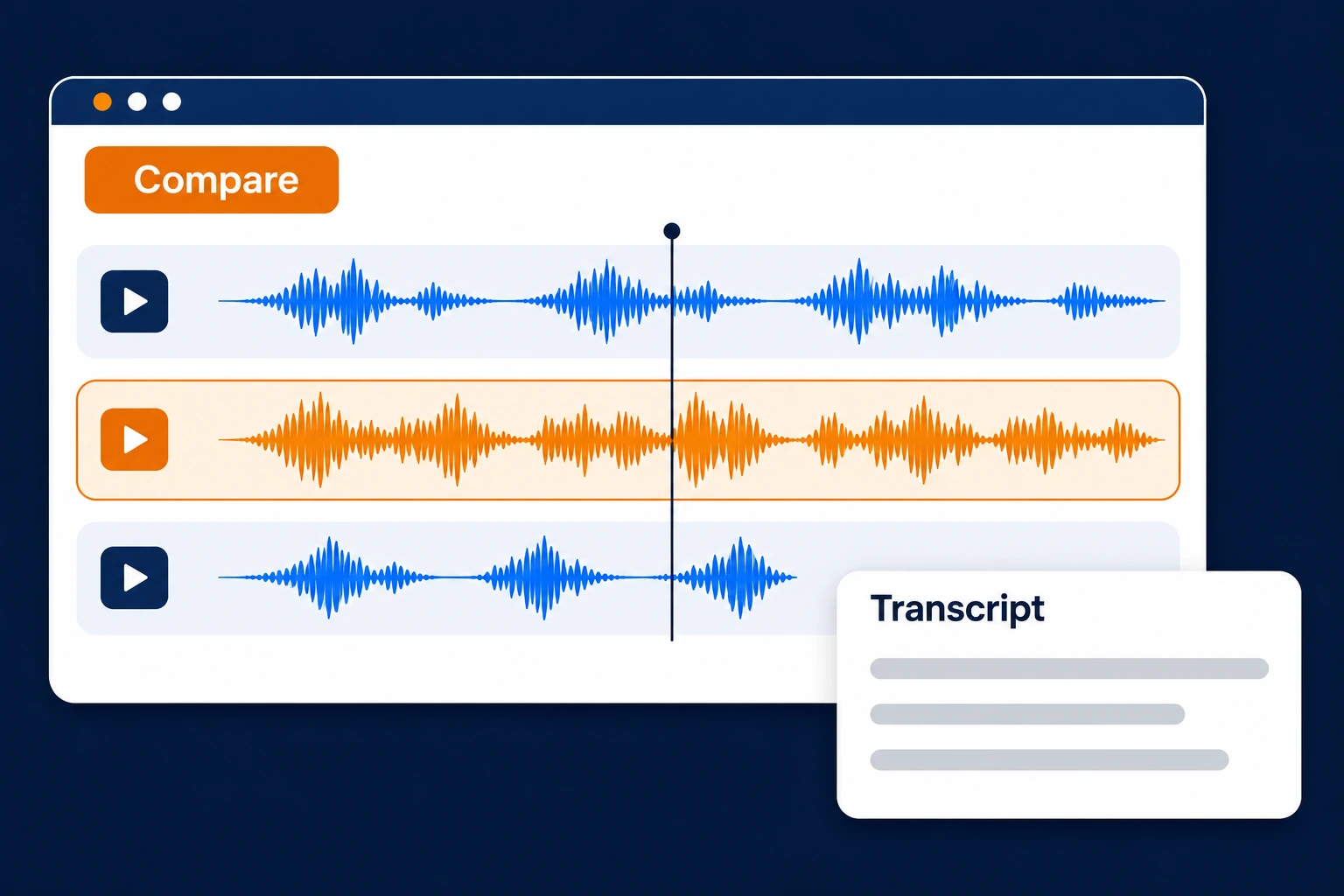
Compare pronunciation, consistency and delivery with representative scripts. Listen beyond a single showcase sentence.
Check the operating fit.
Review response time, streaming behavior, cost and usage terms alongside the listening results. Keep the reasons for the choice visible.
What to verify
A choice with reasons attached.
The useful result is a documented decision: where the selected option fits, which compromises it introduces and what would justify revisiting it.
- The listening criteria match the product.
- Candidates are compared on the same material.
- The decision records strengths and limitations.