Product engineering
From AI prototype to real product.
The demo is a beginning. The next step is a product that people can use, and a team can change with confidence.
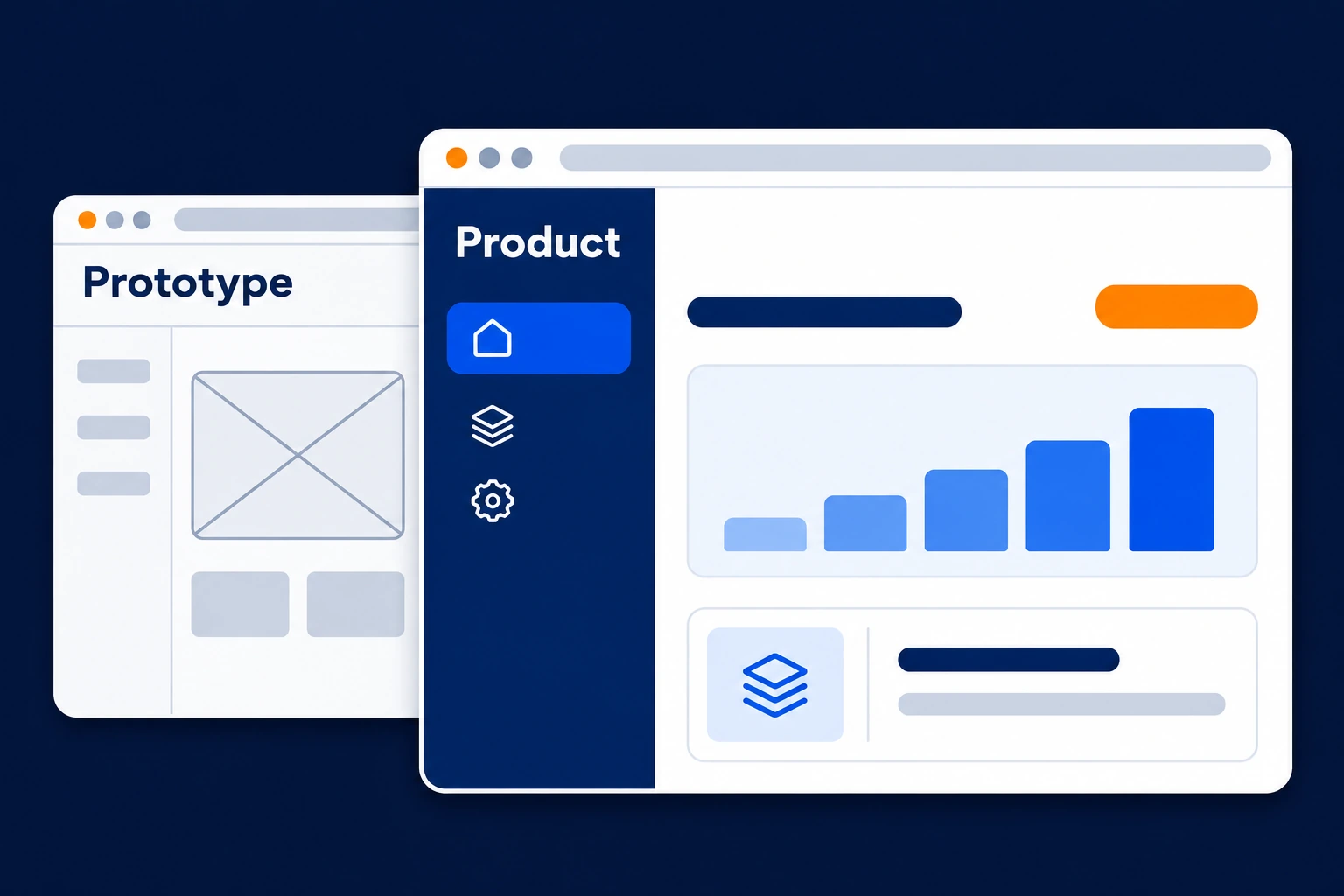
The challenge
A convincing demo can leave difficult questions open.
What happens outside the happy path? Which parts are real, which are temporary, and what breaks when a second person uses the app? Adding more features can make those questions harder to answer. The useful starting point is the smallest complete journey the product needs to support.
The approach
Make one important journey dependable.
Begin with the product people actually need to use. Follow the code, data and external services behind that journey before deciding what to keep, repair or replace.
Trace the real path.
Follow a user action from the interface to stored data and back. Identify assumptions, temporary behavior and missing failure states.
Choose the smallest useful scope.
Separate launch essentials from later features. Prioritize the failures that would prevent someone from completing the core task.
Make the release repeatable.
Define the checks, deployment steps and recovery path needed to release that scope deliberately.
What to verify
Readiness supported by evidence.
A useful result is more than a cleaner demo. It is a clear release scope, a tested core journey and an explicit account of the remaining risks.
- Core tasks work with realistic inputs.
- Failure states are understood and handled.
- The release and recovery steps are repeatable.